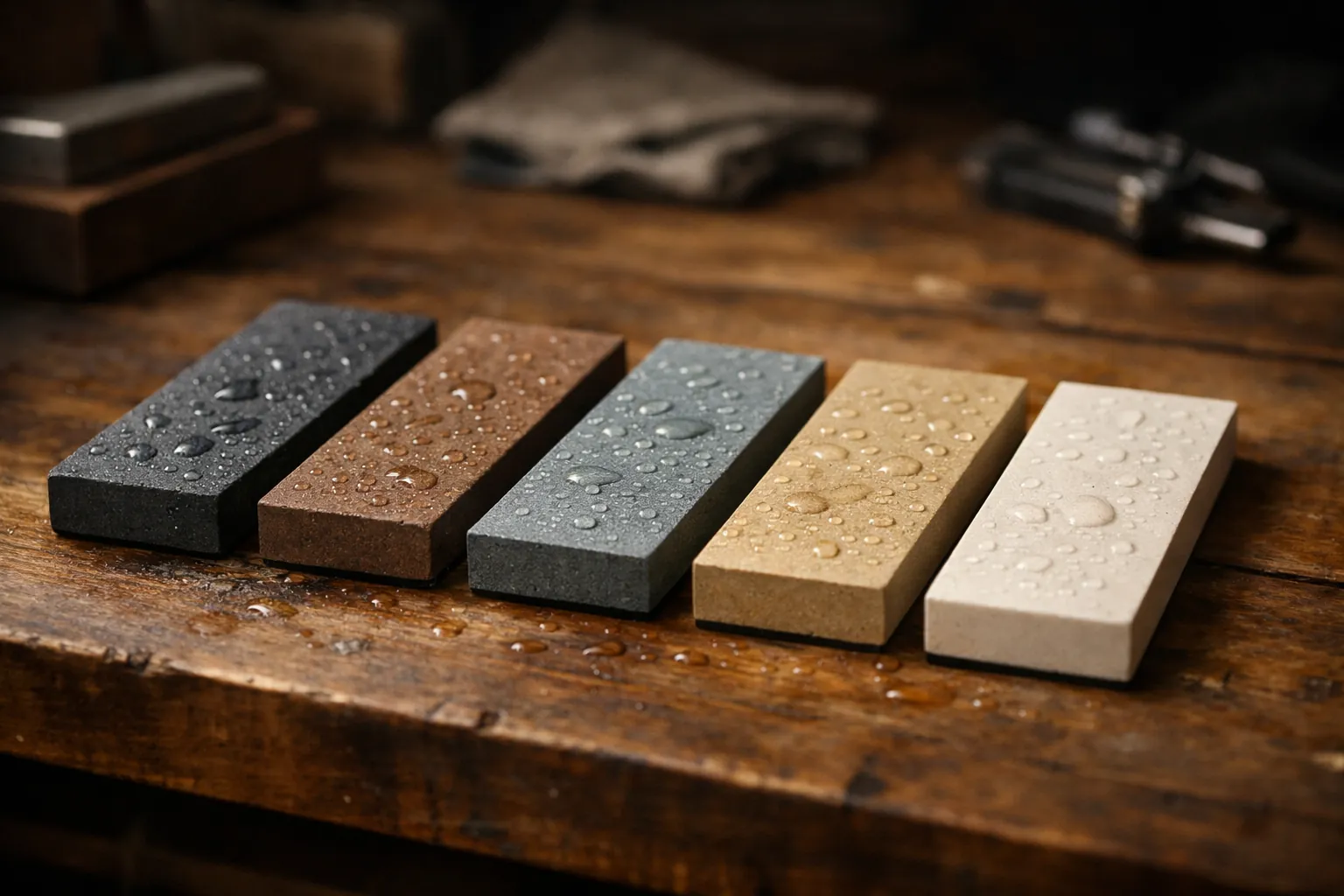
Low grit numbers (below about 600) are coarse and repair damaged edges. Around 1000 is the main sharpening grit. 3000 to 6000 refines and polishes. Go to 8000 and above only for a mirror finish. Most kitchen knives need two stones: a 1000 and something in the 3000 to 6000 range. Buy a coarse stone only if your knives are chipped or neglected.
The grit chart
| Grit range | Job | Use it when | Skip it if |
|---|---|---|---|
| Below 600 (coarse) | Repair, reprofile | Chips, a broken tip, a very dull edge, or changing the angle | Your knife is only slightly dull |
| 800–1500 (medium) | Sharpen | Every normal sharpening; the workhorse stone | Never; everyone needs one |
| 2000–4000 (fine) | Refine | Smoothing the 1000 scratch pattern for a cleaner, longer-lasting edge | You like a toothy edge for tomatoes and crusty bread |
| 5000–8000 (polish) | Polish | A refined slicing edge, especially on Japanese knives | You use softer Western knives for heavy work |
| 10000+ (ultra fine) | Mirror finish | Razors, woodworking tools, enthusiasts | You cook at home; you won't notice the difference |
These ranges are standard, widely used guidance rather than our measurements. Product details below come from Amazon listings checked October 3, 2026. How we research.
Grit progressions for real knives
You don't need every grit. The catch is the size of each jump: skip too far and the finer stone takes forever to erase the coarser scratches. Steps of roughly 2x to 6x are common.
| Situation | Progression | A kit that matches |
|---|---|---|
| Kitchen knives, normal upkeep | 1000 → 6000 | Sharp Pebble 1000/6000 or King KW65 |
| Neglected or chipped knives | 400 → 1000 (→ 3000+) | Sharp Pebble 400/1000 |
| Full range in one kit | 400 → 1000 → 3000 → 8000 | Intelitopia 400/1000 + 3000/8000 |
| Japanese knives, splash-and-go | 1000 → 5000 | Shapton Kuromaku A-set |
| Pocket and outdoor knives, fast | Coarse → extra-fine diamond | SHARPAL 162N 325/1200 diamond |
Toothy vs polished edges
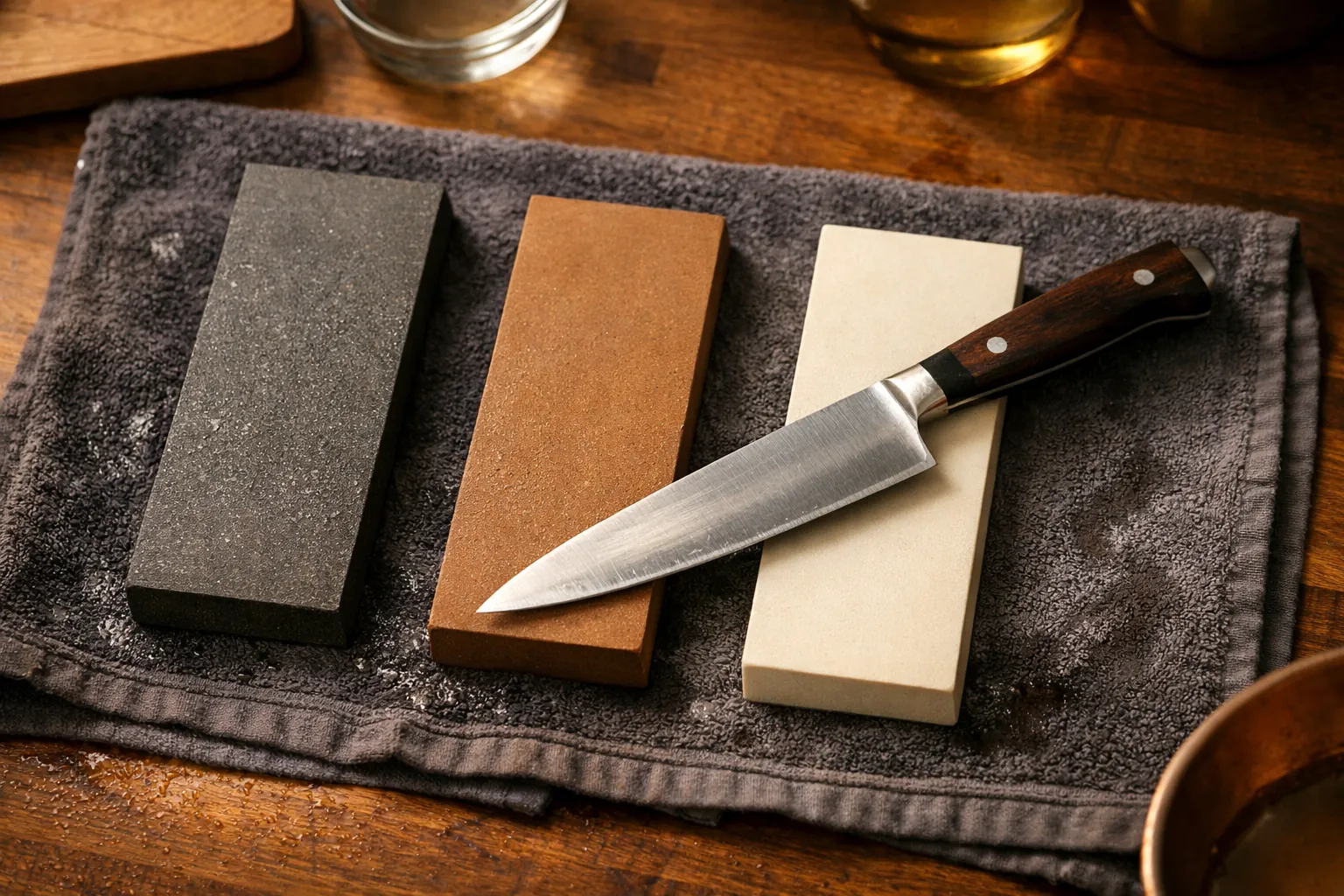
A coarser finish leaves microscopic teeth along the edge that grab and saw. That's what you want on tomato skins and peppers, or a loaf of crusty bread. A polished edge glides instead, and push-cuts fish and herbs cleanly. Neither is wrong. Plenty of home cooks stop at 1000 to 3000 and never miss the polish; Japanese-knife owners often go on to 6000 or 8000.
Why grit numbers don't always match
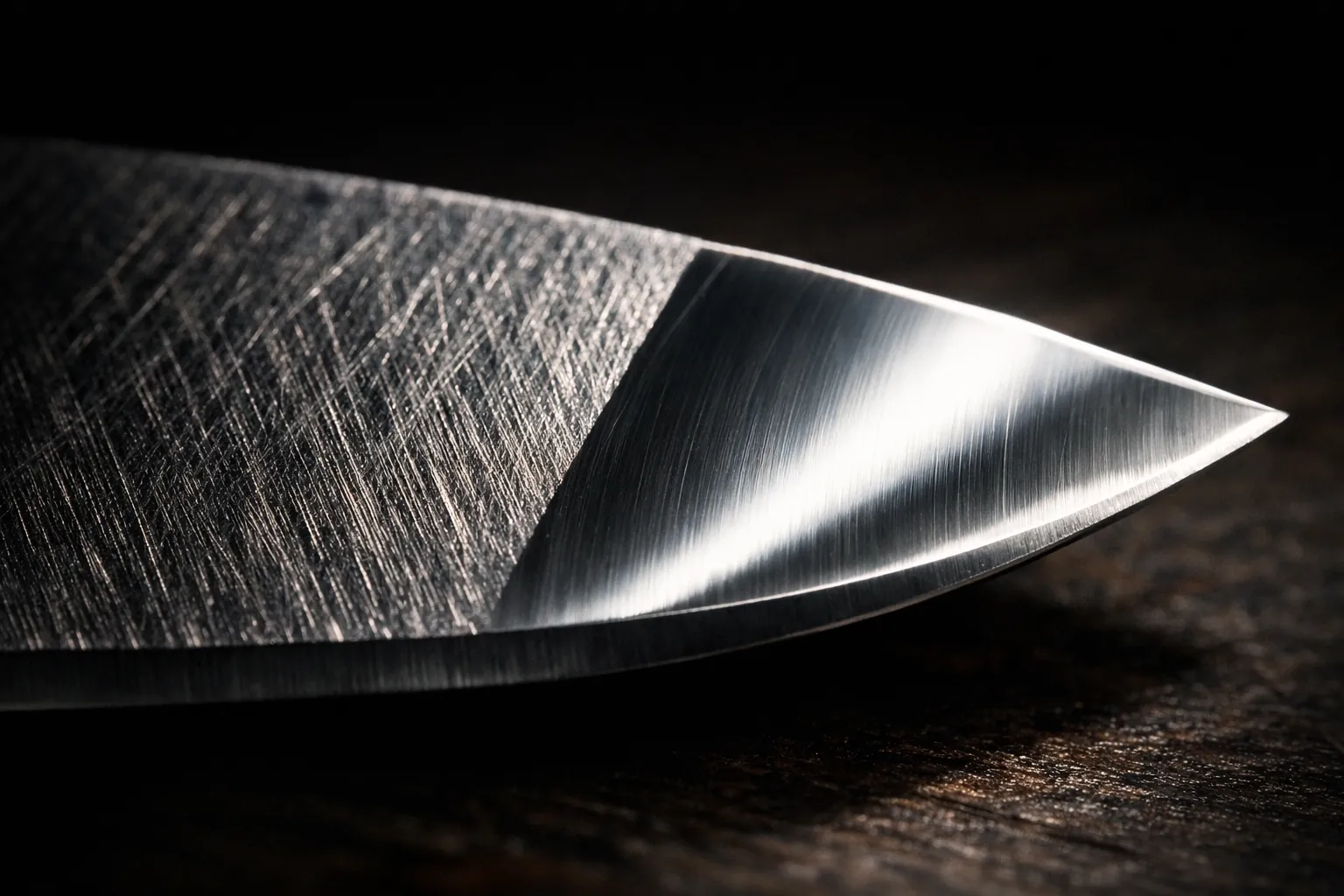
Grit numbers aren't universal. Japanese water stones generally use the JIS scale, many Western abrasives use other standards, and some brands invent their own. So compare microns whenever a maker lists them. SHARPAL, for example, lists its 162N plate as 325 grit (45 micron) and 1200 grit (12 micron).
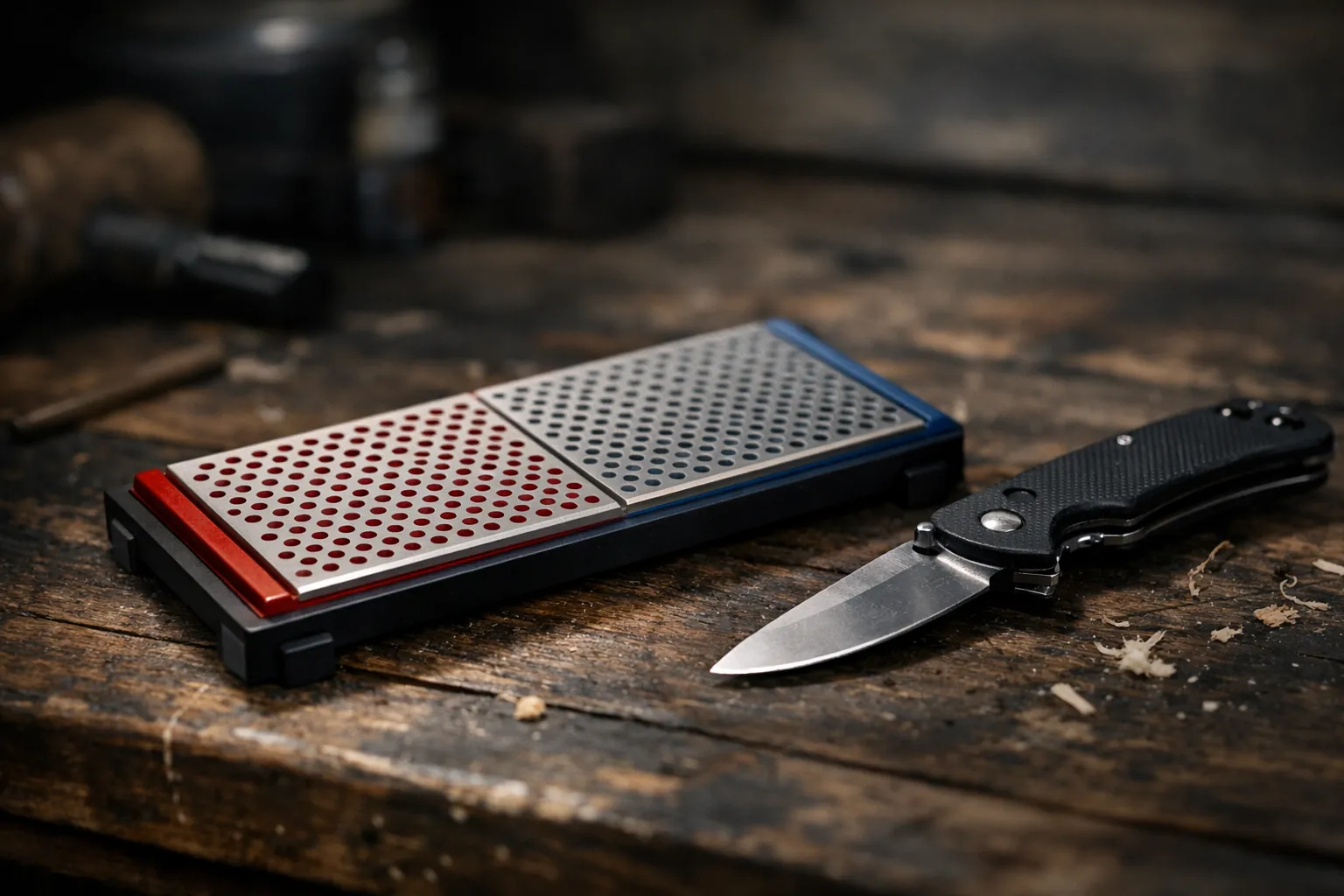
Diamond plates throw the numbers off further. Diamond is far harder than the aluminum oxide or silicon carbide in most water stones, so a diamond plate often feels coarser and cuts quicker than a water stone with the same number.
Guided systems have scales of their own. Lansky's Deluxe kit lists its hones as extra coarse (70), coarse (120), medium (280), fine (600) and ultra fine (1000), which don't line up with water-stone grits at all.
Stone hardness matters too. Soft stones release fresh abrasive quickly and cut fast, but they wear and dish sooner. Hard stones last longer and can feel slower.
Water stones vs oil stones vs diamond plates
| Type | Lubricant | Strengths | Trade-offs |
|---|---|---|---|
| Water stone (synthetic) | Water (soak or splash) | Fast cutting, wide grit range, pleasant feedback | Wears and needs flattening |
| Oil stone (e.g. Arkansas, India) | Honing oil | Hard and slow-wearing, traditional for outdoor knives | Slower; oily cleanup |
| Diamond plate | Dry or water | Very fast, stays flat, handles very hard steels | Coarser feel; fewer very fine options |
For a deeper comparison, read whetstone vs diamond stone.
Which grits for which knife
| Knife | Grits | Why |
|---|---|---|
| German and Western kitchen | 1000, then 3000 to 6000 | Softer steels don't gain much from going past about 6000. |
| Japanese kitchen | 1000, then 5000 to 8000 | Harder steel holds a finer polish, which suits push-cutting and slicing. |
| Pocket and EDC | Coarse diamond or 400 for reprofiling, then 1000 | Many people stop at a medium-fine finish for a slightly toothy, grippy edge. |
| Hunting | Like pocket knives; fine ceramic or 1000-plus, then a strop | Keeps the edge cleaner when processing game. |
Serrated knives are the exception. Flat stones don't fit the scallops, so use a fine ceramic or diamond tapered rod instead; see how to sharpen a serrated knife.
How to tell the grit of an unmarked stone
Old or hand-me-down stones often have no label, but you can make a reasonable guess. Rub a wet fingertip across the surface: coarse stones feel like sandpaper and fine stones feel almost smooth. Then make a few strokes with a knife and look at the bevel. Deep, visible scratches mean coarse. A hazy or reflective finish means fine.
Ignore the color. Makers color their stones differently, so a white stone from one brand can be coarser than a gray stone from another. And if the stone is dark and slick with old oil, it's an oil stone. Keep using oil on it; don't switch to water.
After the stones: stropping
A leather strop loaded with a fine compound polishes the edge beyond most stones and takes off the last of the burr. It costs little and takes a minute; see our leather strop guide. Then put your stones to work with how to use a whetstone, and check the angle chart for your knife.
If you're buying your first stone
Get a 1000/6000 combination like the Sharp Pebble 1000/6000 and nothing else for now. The exception is a drawer of chipped, neglected knives: start with a 400/1000 stone and add the fine side later. Leave 8000 and up for when you've sharpened enough to want it. Our best whetstone sets for beginners compares complete kits if you'd rather buy once.
Grit ranges reflect standard sharpening guidance; product grits come from Amazon listings checked October 3, 2026. How we research · Affiliate disclosure