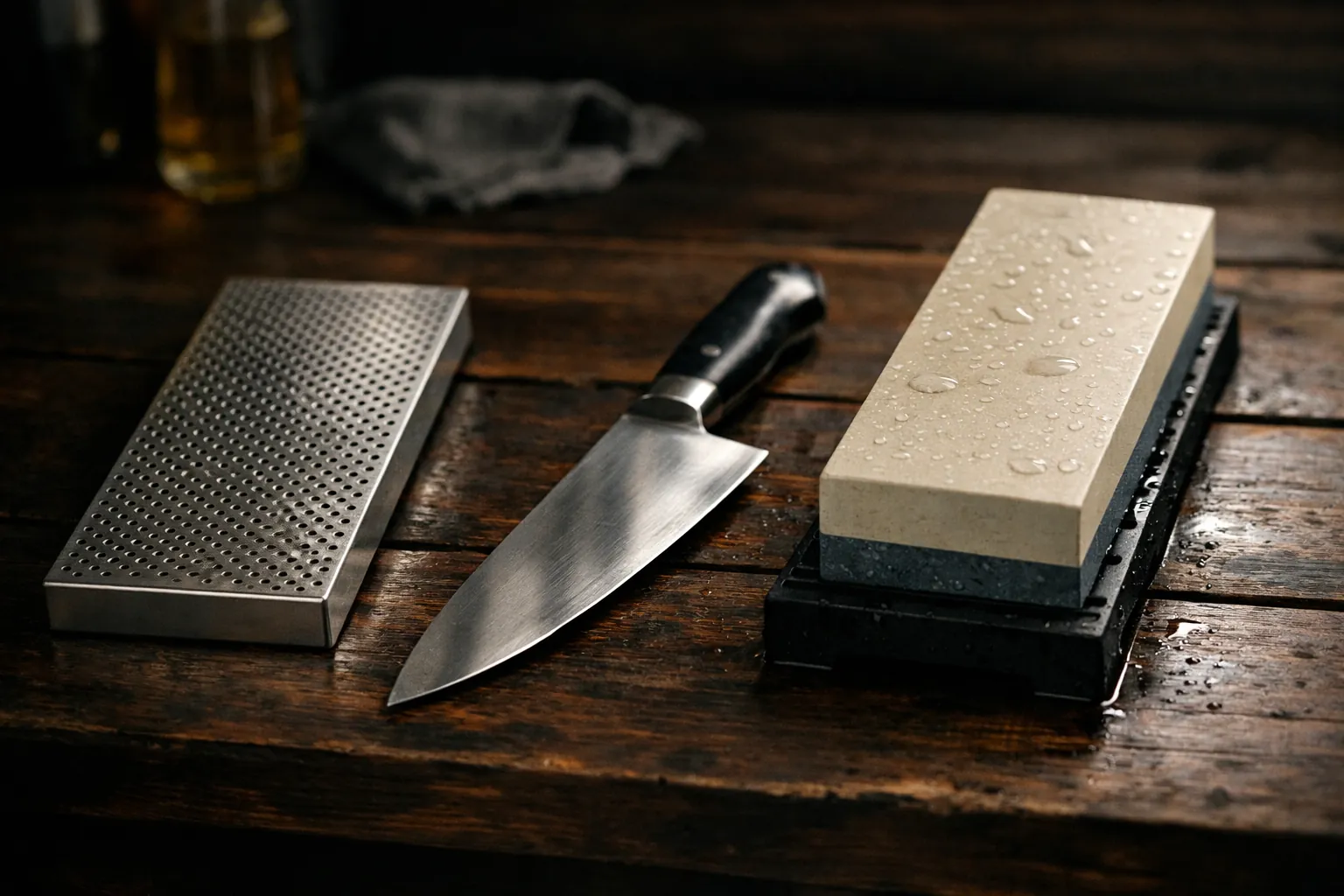
Choose a diamond stone if you want speed, a surface that stays flat and the ability to sharpen very hard steels; choose a water stone (whetstone) if you want a finer, polished edge and more grit choices for less money. For kitchen knives, a water stone set is usually the better first purchase. For pocket knives in hard modern steels, or for flattening water stones, a diamond plate earns its place.
Whetstone vs diamond stone at a glance
| Water stone (whetstone) | Diamond plate | |
|---|---|---|
| Abrasive | Aluminum oxide or silicon carbide in a bonded stone | Diamond particles bonded to a steel plate |
| Cutting speed | Moderate | Fast |
| Flatness | Wears and dishes; needs flattening | Stays flat |
| Very hard steels | Slower | Handles easily |
| Finest finish available | Very fine (8000+ common) | Fewer very fine options |
| Feedback and feel | Smooth, builds slurry | Scratchier, especially when new |
| Prep | Soak (or splash-and-go types) | Dry or a splash of water |
| Cost per grit | Lower | Higher |
This comparison reflects well-established sharpening practice. Products are described from their Amazon listings, checked October 3, 2026; we haven't run our own tests. How we research.
Why they feel so different
A water stone's binder releases worn abrasive and exposes fresh grains, creating a slurry that helps polish. That's why water stones feel smooth and give fine finishes, and why they slowly dish. Diamond is the hardest abrasive in common use, so a diamond plate cuts even very hard, wear-resistant steels quickly and keeps its shape. Grit numbers don't line up exactly between the two; see the grit chart for why.
Which should you buy?
| If you… | Choose | Example |
|---|---|---|
| Sharpen kitchen knives at home | Water stones | Sharp Pebble 1000/6000 |
| Own Japanese knives and want a refined edge | Water stones | Shapton Kuromaku 1000 + 5000 |
| Carry pocket knives in very hard steels | Diamond plate | SHARPAL 162N 325/1200 |
| Need to repair chips fast | Coarse diamond plate | DMT DuoSharp 8" coarse/fine |
| Need to flatten your water stones | Coarse diamond plate | SHARPAL 162N |
| Sharpen outdoors or on the go | Small diamond stone | Smith's DCS4 4" diamond |
Diamond stones worth knowing
The SHARPAL 162N is a popular 8 x 3 inch double-sided plate. SHARPAL lists it as monocrystalline diamond electroplated on a stainless steel base, with a coarse 325 grit (45 micron) side and an extra-fine 1200 grit (12 micron) side, usable dry, plus a storage box that doubles as a non-slip base and an angle guide with 14°, 17°, 20° and 25° settings. It ranks in Amazon's top 10 sharpening stones with 1,000+ purchases last month.
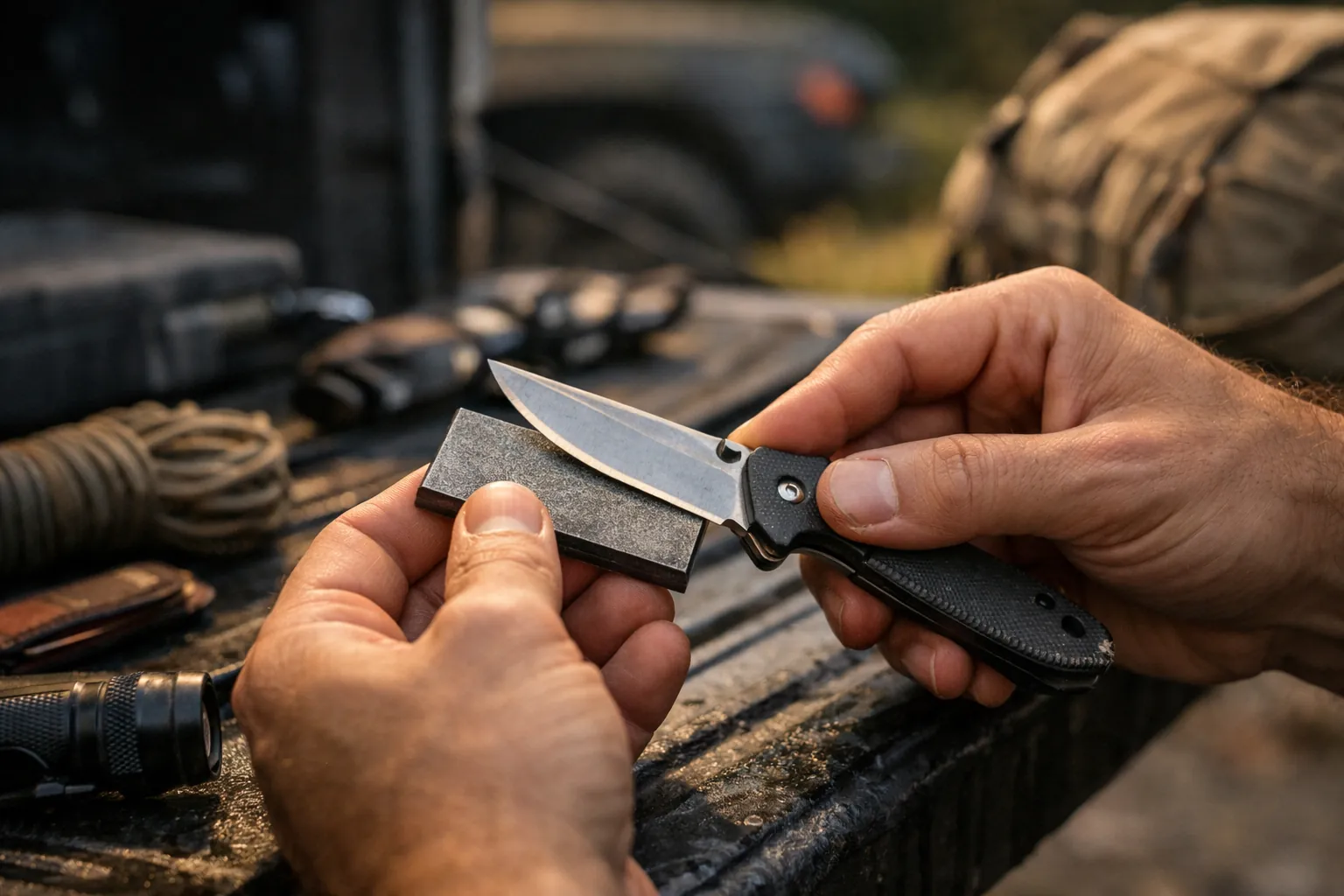
DMT is the long-established name in diamond plates; the DMT DuoSharp 8-inch fine/coarse is its double-sided bench plate. For pockets and packs, small stones like the Smith's DCS4 or the Fallkniven DC4 (diamond on one side, ceramic on the other) are common choices.
Water stones worth knowing
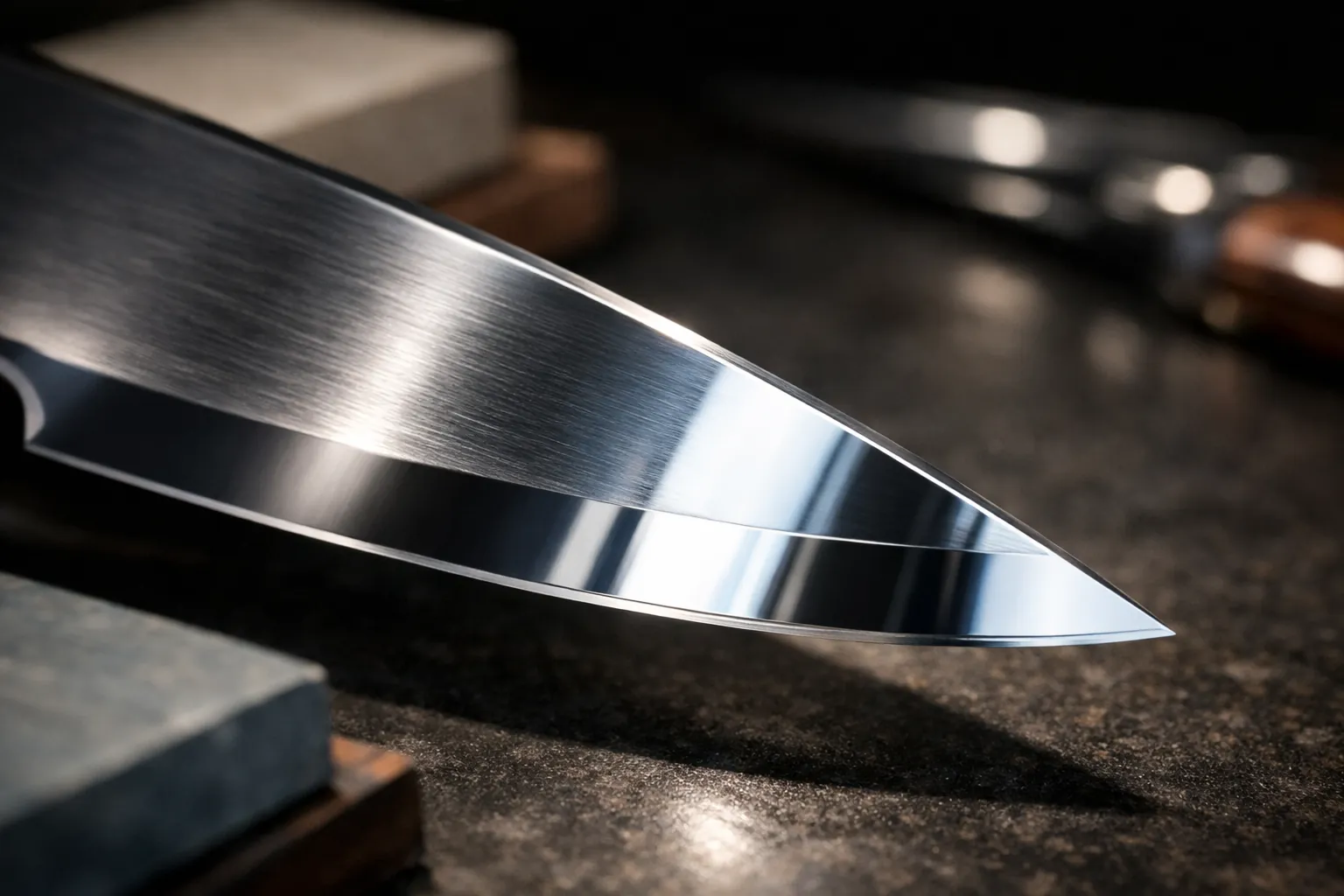
For most kitchens, a 1000/6000 combination stone like the Sharp Pebble 1000/6000 or the King KW65 covers sharpening and finishing. If you want splash-and-go convenience and a refined finish, Shapton's Kuromaku stones are a common step up. Compare kits in the best whetstone sets for beginners.
Using both: the common combination
A very common setup is one coarse diamond plate plus two water stones:
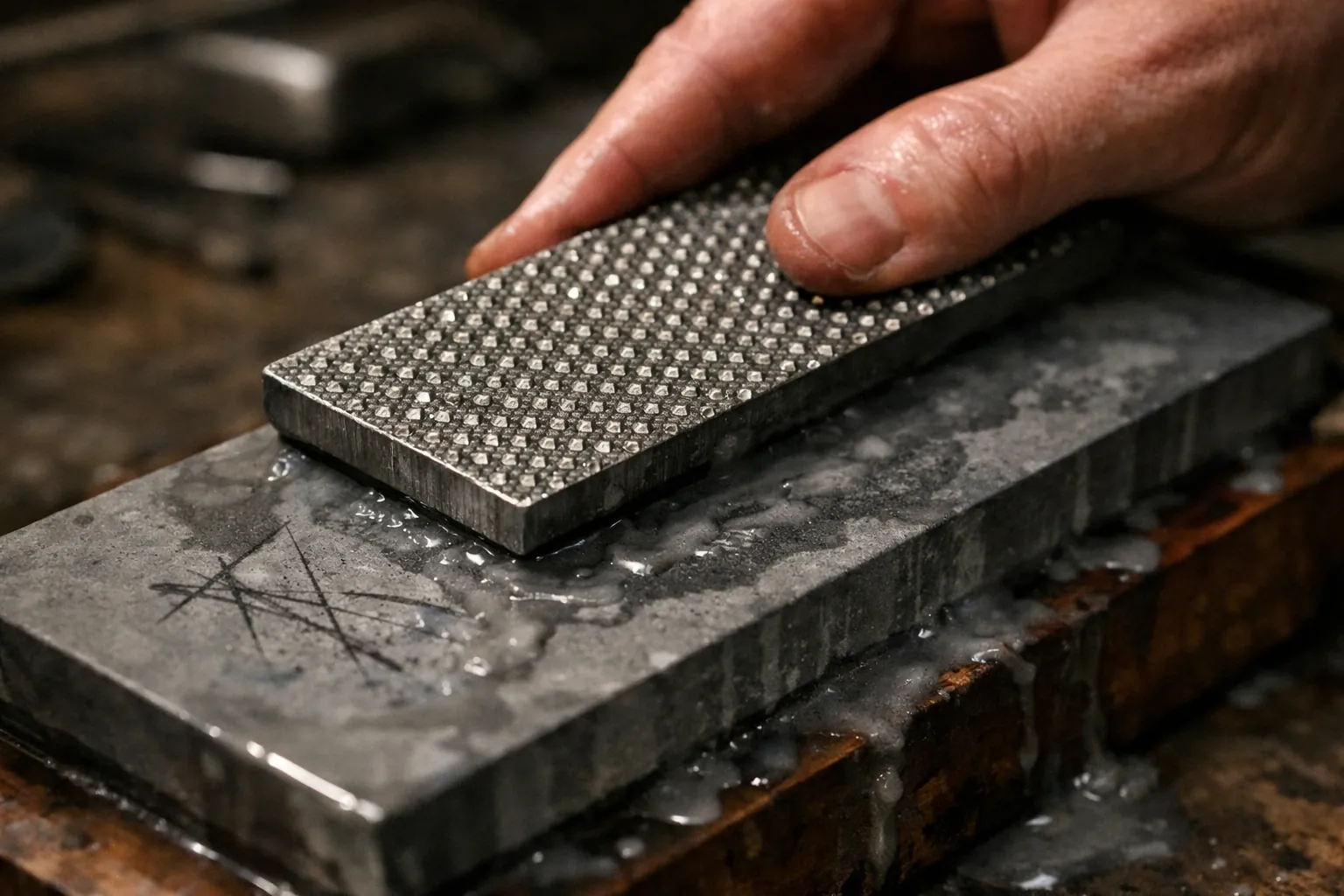
- Diamond plate for repairs, reprofiling and very hard steels, and for flattening the water stones.
- 1000 water stone for routine sharpening.
- 3000 to 6000 water stone to refine and polish.
Cost and lifespan over time
A water stone is a consumable: every sharpening wears a little of it away, and flattening removes more. A home cook can still get years from a stone, especially the finer grits, which wear slowly. Coarse, soft stones go fastest. A diamond plate doesn't get thinner, but the diamond layer gradually loses its bite with heavy use and can be damaged by pressing hard or catching an edge in it. In practice, a home user replaces neither very often; the bigger cost difference is up front, where water stones give you more grits for the money.
Steel hardness: when diamond really matters
Many kitchen knives use stainless steels that conventional water stones sharpen without trouble. Some modern pocket knives and premium Japanese knives use very hard, wear-resistant steels with lots of hard carbides; conventional abrasives cut those slowly, while diamond cuts them readily. If your knife's maker describes it as a high-wear-resistance or powder steel and your water stone seems to take forever, that's when a diamond plate pays off. CBN (cubic boron nitride) abrasives fill a similar role and are also sold for some guided systems.
What about oil stones?
Natural and synthetic oil stones, such as Arkansas and India stones, are the traditional third option. They're hard, slow-wearing and common in outdoor and hunting kits, but they cut more slowly than water stones and need honing oil. If you already own one, keep using oil on it; switching an oiled stone to water doesn't work well. For new buyers, water stones or diamond plates are usually the faster, cleaner choice.
Tips for each
Diamond plates
- Use light pressure, especially when the plate is new; heavy pressure just tears out diamonds.
- Add a little water to carry away metal particles, unless the maker says dry only.
- Clean and dry the plate after use.
Water stones
- Soak soaking stones until the bubbles stop; splash-and-go stones just need water on top.
- Use the full length of the stone and flatten it every few sessions.
- Let stones dry completely before storing.
Whichever you choose, the angle matters more than the abrasive: many Japanese knives are sharpened around 15° per side and many German knives around 20°. Check your knife maker's recommendation, and see the angle chart and how to use a whetstone.
The bottom line
For kitchen knives, start with water stones: they're cheaper per grit and give a finer edge. Add a diamond plate when you need speed for repairs, have very hard steels, or want an easy way to flatten your stones. Pocket-knife owners with modern super steels may find a diamond plate is the better first buy.
Product details from Amazon listings checked October 3, 2026. We do not quote prices we have not checked. How we research · Affiliate disclosure