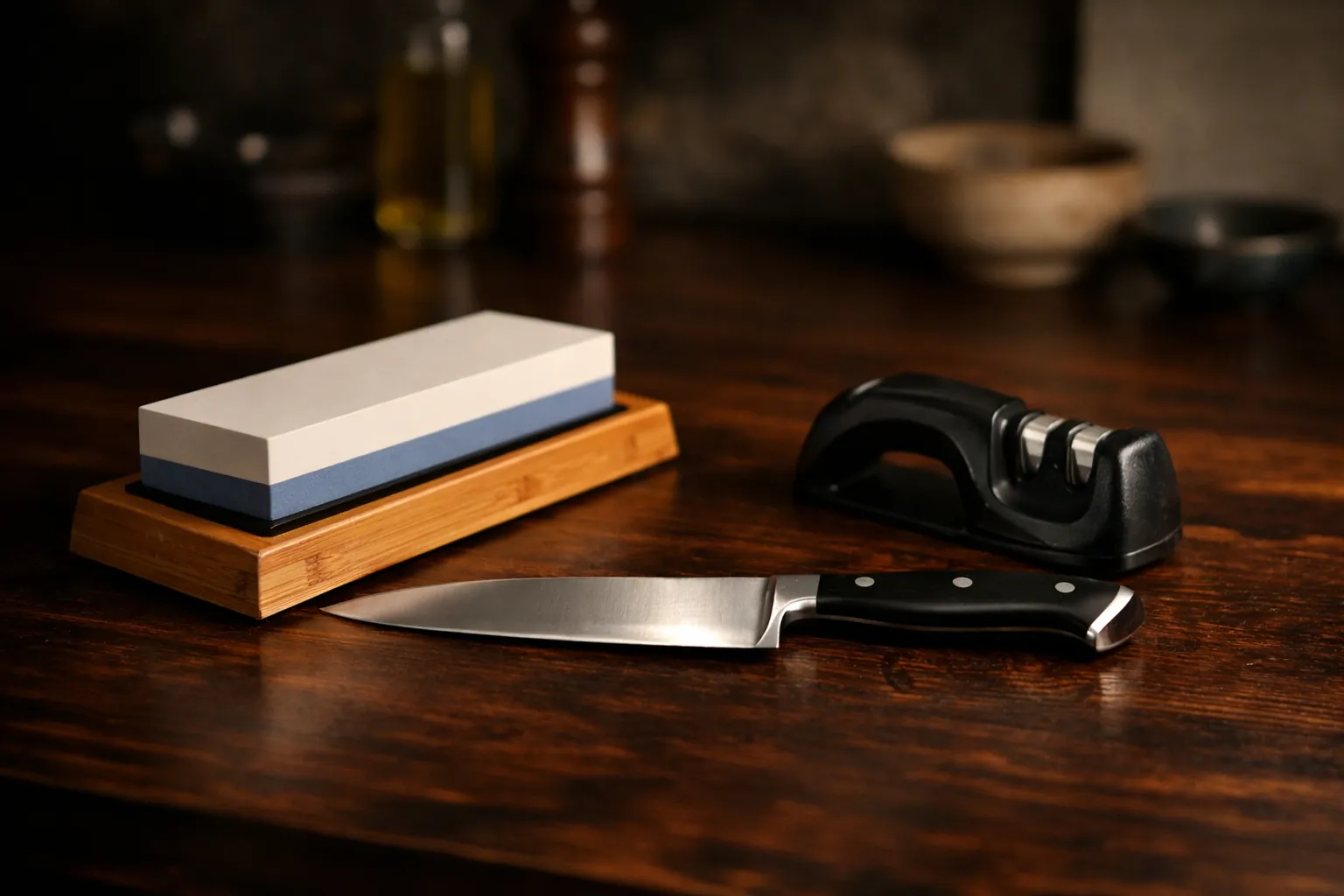
Buy a whetstone if you want the sharpest, longest-lasting edge and you'll spend 10 to 15 minutes learning; buy a knife sharpener if you want sharp knives in under a minute with no skill. Whetstones remove less metal, let you choose the angle and suit any knife, including Japanese ones. Pull-through and electric sharpeners trade that control for speed. If you want both, a guided system sits in the middle.
How we compared them
This comparison is built on well-established sharpening practice plus the products people actually buy. We checked Amazon's best-seller data on October 3, 2026: the #1 seller in honing stones was the Sharp Pebble 1000/6000 whetstone (3,000+ bought in the past month), while pull-through models like the KitchenIQ Edge Grip have nearly 98,000 ratings. Specs below come from each product's listing.
We research rather than run sharpening tests: comparisons come from manufacturer specs, owner feedback and standard sharpening knowledge. How we research.
The real difference: who holds the angle
Every sharpener does the same thing: it grinds two bevels until they meet in a clean apex. The difference is who controls the angle and how much metal comes off.
| Whetstone | Pull-through | Electric | Guided / rolling | |
|---|---|---|---|---|
| Edge quality | Best (you choose the finish) | Usable, toothy | Good, consistent | Very good |
| Angle control | Any angle | Fixed | Fixed (some adjustable) | Set by the tool |
| Metal removed | Only what you choose | A lot (coarse slot) | Moderate | Low to moderate |
| Learning curve | A few sessions | None | None | Minutes |
| Time per knife | 5–15 min | Under a minute | About a minute | 3–10 min |
| Japanese knives | Ideal | Risky | Double-bevel only | Good |
| Serrated knives | Not suited | Often yes | Often yes | Some models |
| Mess | Water and slurry | Metal dust | Metal dust | Little |
Times are typical ranges from standard practice and manufacturer guidance, not our measurements.
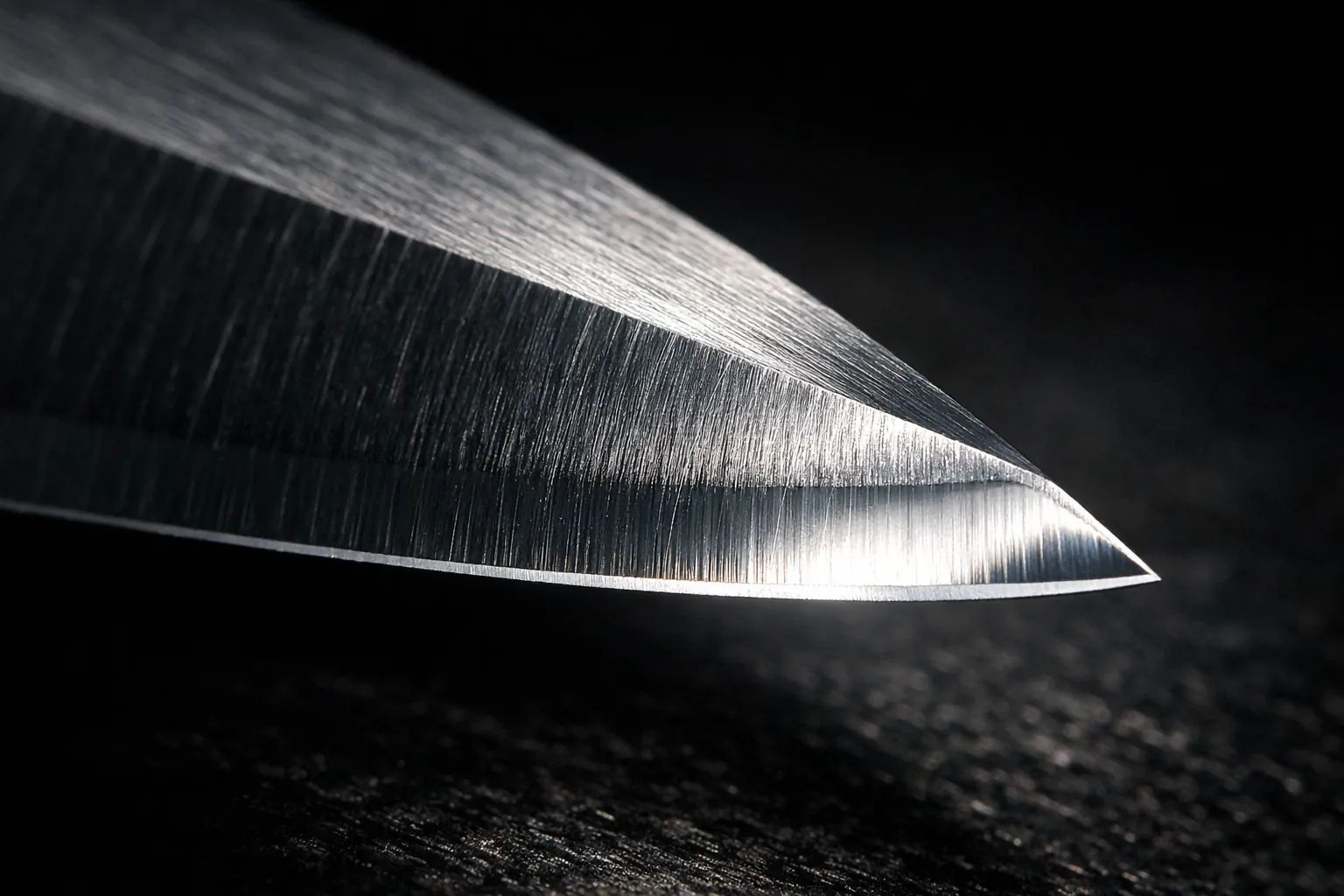
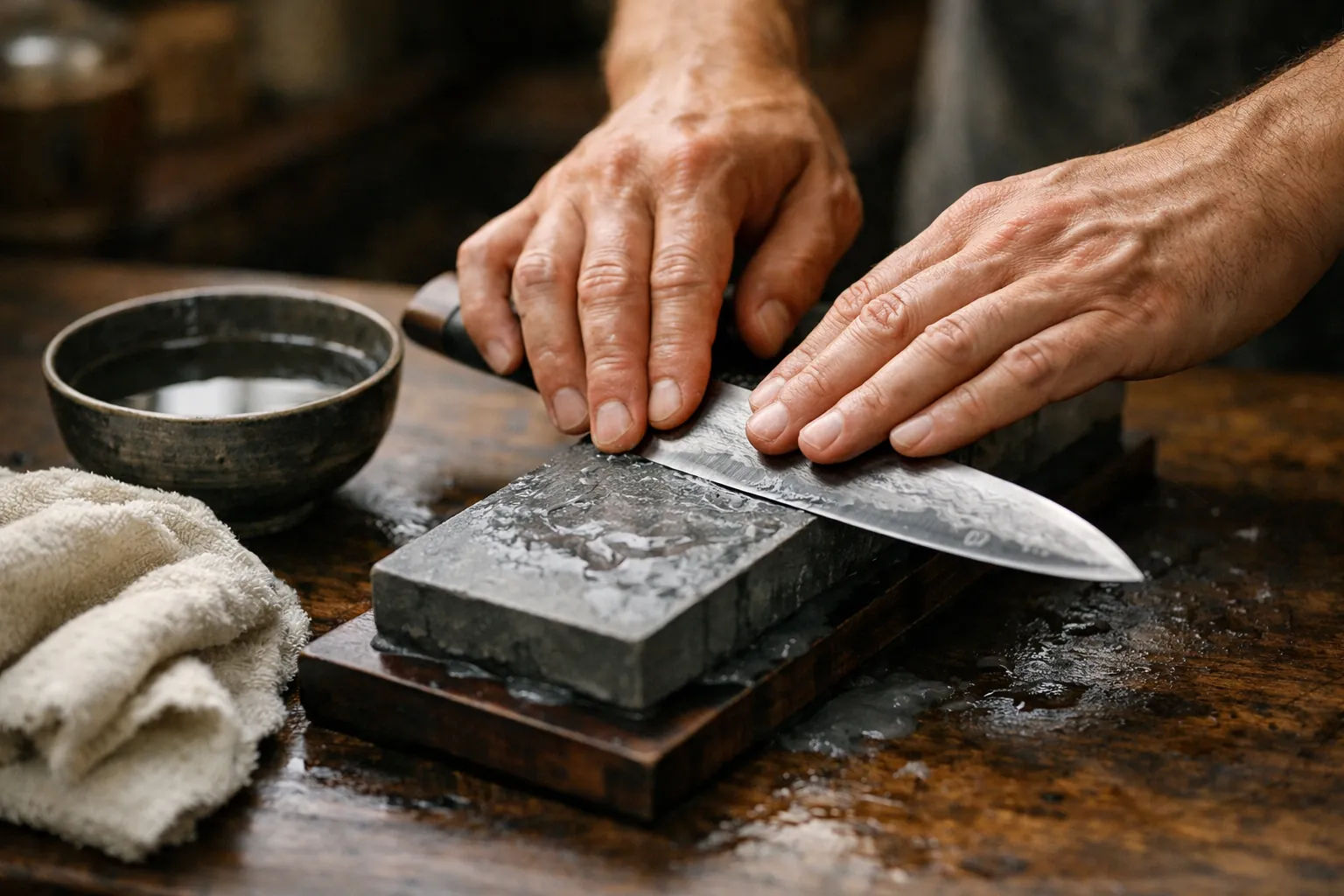
Choose a whetstone if…
- You own Japanese knives or any thin, hard blade. Coarse carbide slots can chip them; stones don't.
- You want to choose the angle. Many Japanese knives are sharpened around 15° per side and many German knives around 20°; check your knife maker's recommendation, then hold that angle on the stone.
- You want knives to last. A stone removes only the metal needed, so blades stay full-size for decades.
- You'd enjoy the process. Many cooks find 10 minutes on a stone relaxing.
Sharp Pebble 1000/6000 Whetstone
The most popular starter whetstone on Amazon pairs a 1000 grit side for sharpening with a 6000 side for polishing, plus a clip-on angle guide and a non-slip bamboo base. It's a water stone, so there's no honing oil to buy. If your knives are only dull rather than damaged, these two grits cover nearly everything a home cook needs.
- Grits1000 / 6000
- Lubricantwater
- Size7.25 x 2.25 x 1 in
- Includedbamboo base, angle guide
- Amazon rank#1 in Honing Stones
Why it stands out
- The standard beginner grit pair
- Angle guide helps you learn a steady angle
- 25,000+ owner ratings
Think twice if
- Your knives are chipped or very dull: add a 400 grit stone first
- You won't put in a few practice sessions
Sharp Pebble 400/1000 Whetstone
If your knives have been through years of neglect, start coarser. The 400 side rebuilds a dull or damaged edge quickly, and the 1000 side refines it. This kit also includes a flattening stone, which keeps the stone flat as it wears and matters more than most beginners realize.
- Grits400 / 1000
- Lubricantwater
- Size7.25 x 2.25 x 1 in
- Includedflattening stone, non-slip rubber base, angle guide
Why it stands out
- 400 grit fixes neglected edges quickly
- Flattening stone included
Think twice if
- You want a polished finish: you'll need a finer stone too
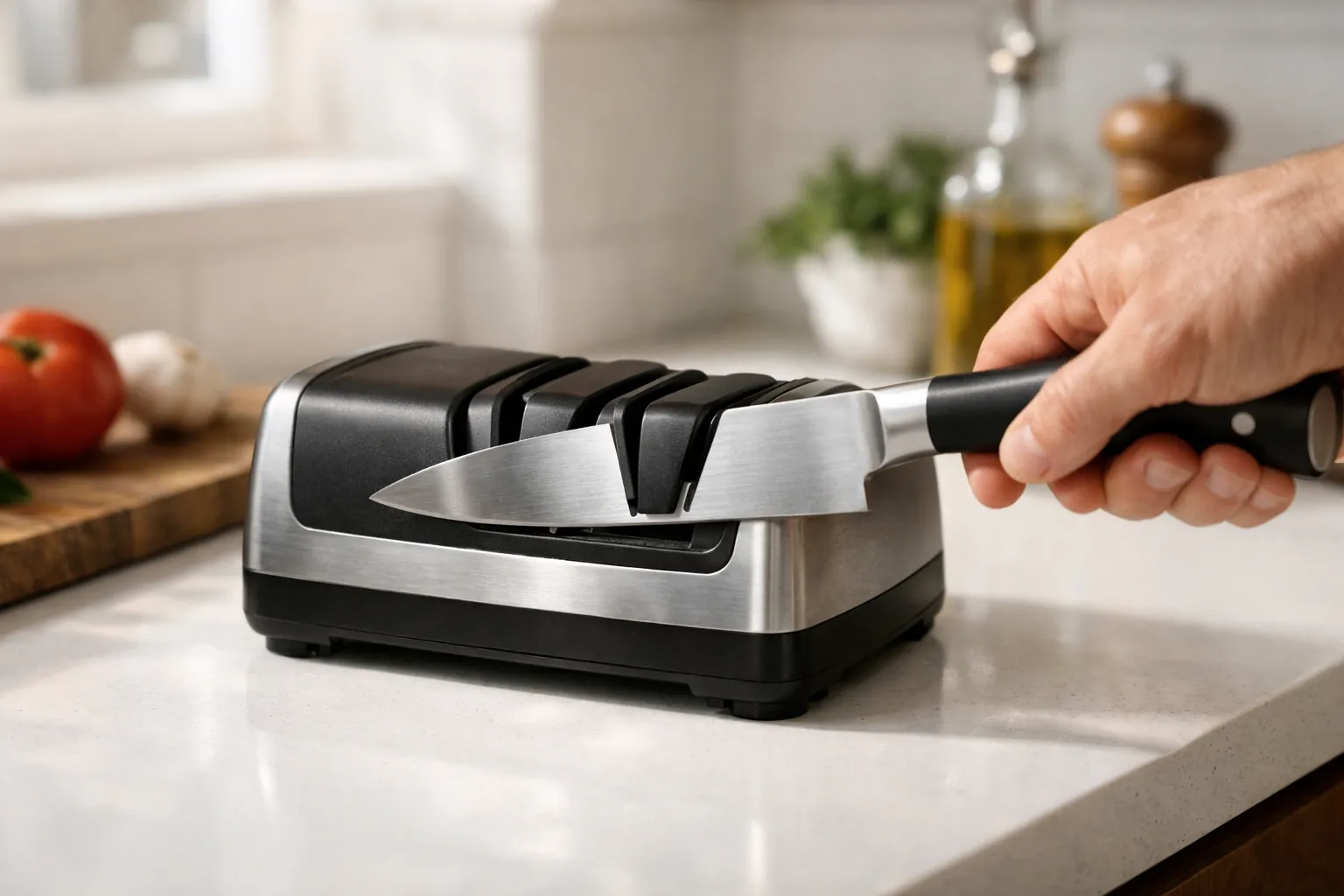
Choose a knife sharpener if…
- You want sharp knives tonight and don't want a new skill.
- Your knives are inexpensive stamped blades from a block set.
- You need to sharpen serrated knives; many pull-through and electric models handle them, stones generally don't.
- You'll sharpen often but briefly, in 30-second bursts.
Chef'sChoice 15XV EdgeSelect
If you're choosing a sharpener specifically to avoid learning a stone, this is the one that comes closest to stone-like results. Spring-loaded guides hold the angle, two diamond stages sharpen, and a third flexible stage strops. Chef'sChoice says a first sharpening takes about a minute. It turns typical 20° factory edges into 15° edges.
- Type3-stage electric
- Edge15°
- Abrasives100% diamond stages 1-2, flexible stropping stage 3
- Knivesstraight and serrated
Why it stands out
- Consistent edge with no skill
- Stropping stage for a cleaner finish than pull-throughs
Think twice if
- You own single-bevel Japanese knives
- You want to choose your own angle
KitchenIQ Edge Grip 2-Stage
The pull-through with nearly 98,000 ratings. It's small, cheap and does the job on everyday kitchen knives. Use the ceramic slot for routine touch-ups and the carbide slot only when a knife is truly dull.
- Typemanual pull-through
- Stagescarbide coarse + ceramic fine
- Knivesstraight and serrated
- Basenon-slip with counter-edge V grip
Why it stands out
- Inexpensive, compact, foolproof
- Handles serrated edges
Think twice if
- Your knives are Japanese or high-end
The middle ground: guided and rolling sharpeners
If you want a stone-quality edge without learning freehand, a guided system clamps the knife and holds the angle while you use flat abrasives. The Work Sharp Precision Adjust adjusts from 15° to 30° and uses diamond and ceramic abrasives. Rolling sharpeners like the HORL 3 Cruise use a magnetic block set at 15° or 20° and a diamond disc you roll along the edge. Both give far more control than a pull-through. See our best sharpening system guide for more.
Which is better for your knives
The knife you own matters more than the sharpener you like the look of. Use this as a starting point:
| Your knives | Best choice | Why |
|---|---|---|
| Inexpensive block set | Pull-through or electric | Speed matters more than metal saved; the knives are easy to replace. |
| German or Western chef's knives | Whetstone, guided or electric | Softer steel forgives anything; many are sharpened around 20° per side. |
| Japanese double-bevel (gyuto, santoku) | Whetstone or guided | Hard, thin edges can chip in coarse carbide slots; many are sharpened around 15° per side. |
| Japanese single-bevel (yanagiba, deba) | Whetstone only | The flat back and single bevel need a flat stone; slots and most guided tools don't fit. |
| Serrated bread knives | Ceramic rod or a sharpener with a serrated slot | Flat stones can't reach into scallops. See how to sharpen a serrated knife. |
| Pocket and hunting knives | Guided or field sharpener | Short, curved blades are awkward on slots; see pocket knife sharpeners. |
Angles above are common starting points, not rules. Check your knife maker's recommendation, and see our angle chart for more knife types.
Signs you've outgrown a pull-through sharpener
- The edge goes dull within days. Coarse slots leave a rough, toothy edge with a burr that folds over quickly.
- You can see a wavy or scratched edge. Carbide slots can tear rather than grind, especially on harder steel.
- Your knife has a dip near the heel. Repeated pull-through sharpening often over-grinds the section closest to the handle, leaving a gap when the knife rests on the board.
- You bought a better knife. A Japanese or premium German knife deserves a tool that removes less metal.
Any of these is a good reason to move up to a stone or a guided system. You don't have to throw out the pull-through: its fine ceramic slot is still handy for a quick touch-up.
What each costs over time
A whetstone kit and a good pull-through cost roughly the same up front. Over years, a stone wears slowly and needs flattening, but it removes little metal from your knives. Pull-through carbide slots and electric abrasives wear too, and the coarse stages take more steel off the blade each time, which shortens a knife's life. If you've spent real money on knives, that's the strongest argument for a stone or guided system.
Why many cooks end up with both
The common setup is a honing rod for weekly touch-ups, a stone or guided system for a full sharpening a few times a year, and nothing else. Honing straightens the edge between sharpenings so you sharpen far less often; see honing rod vs whetstone. When you're ready to learn, our how to use a whetstone guide walks through it step by step.
The bottom line
If you care about your knives and will practice a little, buy a whetstone: the Sharp Pebble 1000/6000 is the classic first stone. If you just want sharp knives fast, buy the Chef'sChoice 15XV electric or, on a budget, the KitchenIQ Edge Grip. And if you want a stone-quality edge without the learning curve, the Work Sharp Precision Adjust is the best of both.
Specs, ratings and sales figures come from each product's Amazon listing, checked October 3, 2026. We do not quote prices we have not checked. How we research · Affiliate disclosure